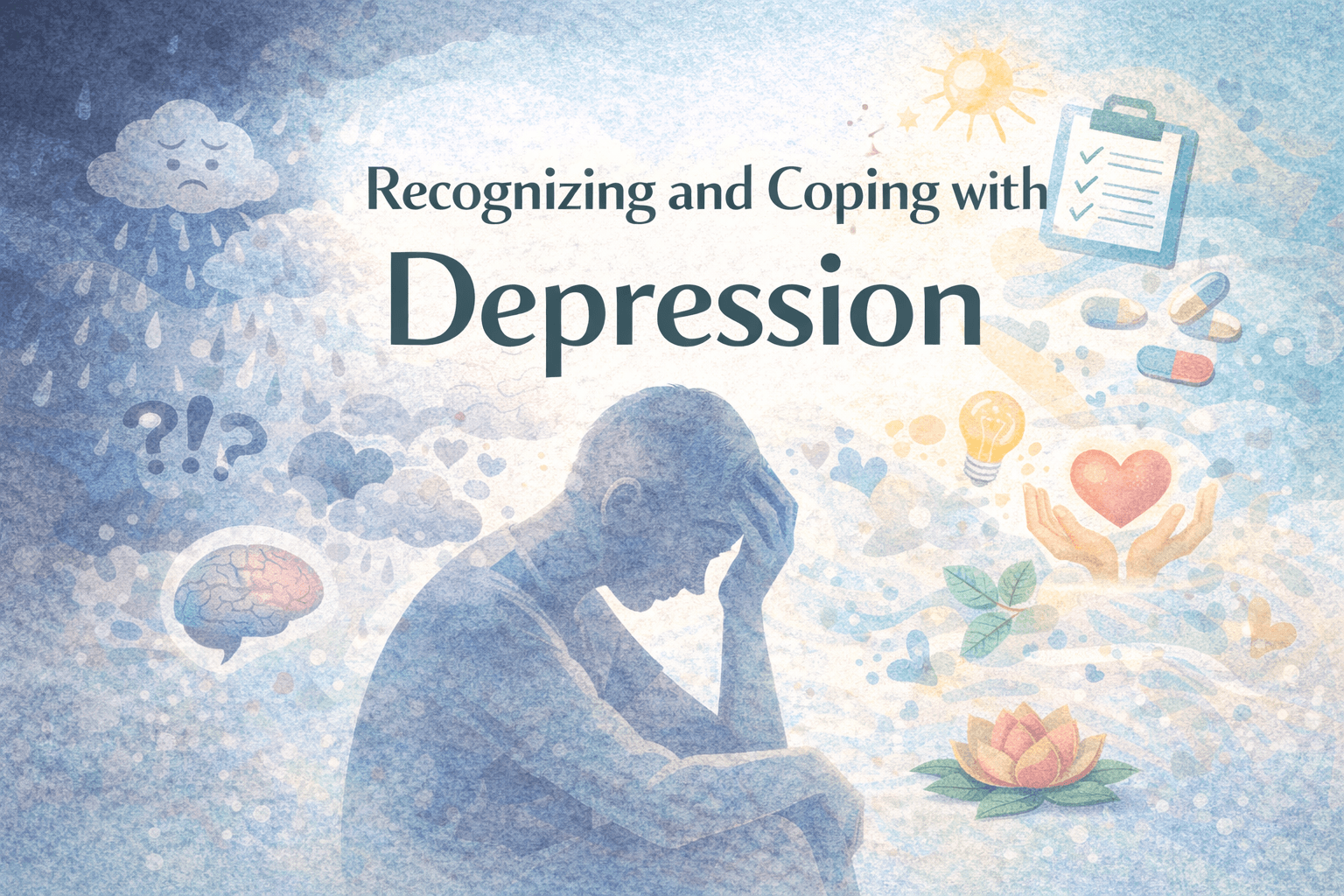
Depression is more than low mood or a bad week. It affects how you feel, think, and function, often for weeks or longer. Recognising the signs and knowing what helps can guide you toward support and recovery.
Common signs
Depression can show up as persistent sadness, emptiness, or irritability; loss of interest in things you used to enjoy; changes in sleep or appetite; low energy; difficulty concentrating; feelings of worthlessness or guilt; or thoughts of death or suicide. Not everyone has every symptom. Severity and pattern vary. If several of these last for two weeks or more and get in the way of your life, it’s worth taking seriously.
When to seek help
You don’t have to wait until you can’t function. Reaching out to a GP or mental health professional early is useful. If you have thoughts of harming yourself or ending your life, please contact a helpline or emergency service. You deserve support, and help is available.
What helps: professional support
Evidence-based treatments for depression include therapy (such as cognitive behavioural therapy or interpersonal therapy) and, when appropriate, medication. A GP or psychiatrist can discuss options. Many people benefit from a combination of therapy and medication; others from therapy alone. The right plan depends on your situation and preferences.
What helps: daily habits
Alongside professional care, these can support recovery:
- Movement: Even brief, gentle activity can improve mood and energy.
- Routine: Regular sleep, meals, and one or two small anchors (a walk, a call) add structure when motivation is low.
- Connection: Isolation feeds depression. Short, low-pressure contact with people you trust can help.
- Compassion: Depression is not a character flaw. Treat yourself as you would a friend who is struggling.
Recovery takes time
Improvement is often gradual. Some days will be harder. Setbacks don’t undo progress. With the right support and steady, gentle effort, many people recover and go on to manage well. You don’t have to do it alone.